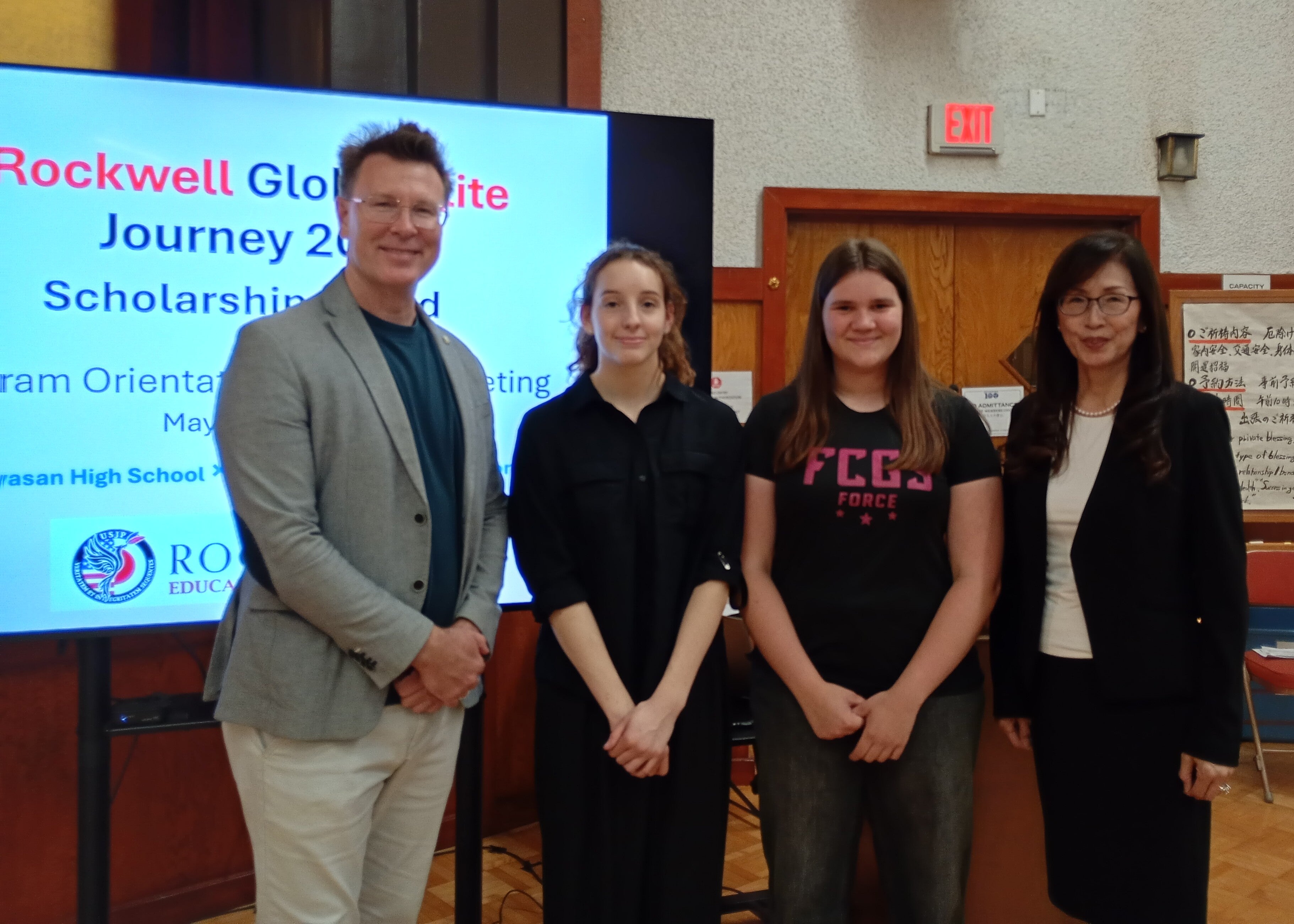
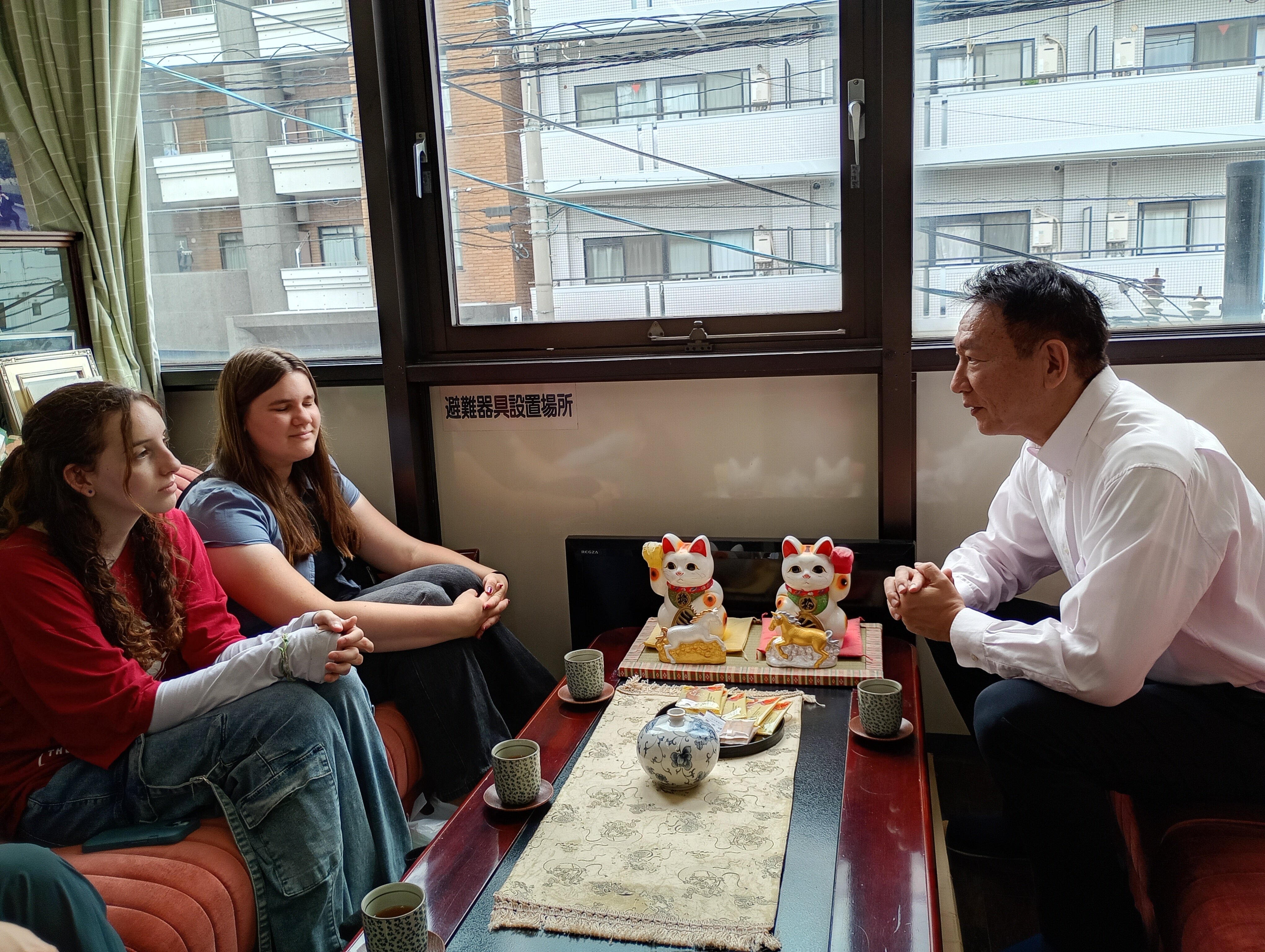
当初は有料の教育プログラムとして参加者を募る構想でしたが、資質と意欲を備えた生徒に広く学びの機会を提供したいと考え、実施に際して弊社独自の奨学金制度を設けることとしました。 奨学金には62名の応募があり、その中から2名の生徒が選ばれ、奨学生として本プログラムに参加しました。選抜されたのは、Sofia Obradovicさん(Burbank High School1年生) とChloe Whiteさん(Burbank High School2年生)の2名です。 奨学金授与式は、2026年5月17日、ロサンゼルスのリトル東京にある高野山別院で行われ、同別院の松元大宗先生からお話もいただきました。
プログラム全体を通じ、2人を引率する立場として、非常に大きな責任を感じていました。安全を確保することはもちろん、この機会を真に意義ある学びへと結実させる責務があったからです。その期待に応えるように、2人は新たな環境へ柔軟に適応し、主体的に学びを深めていきました。 Sofia Obradovicは、医学の道を志す、非常に聡明な生徒です。高野山高校へ向かう初日には、和歌山県紀の川市にある華岡青洲記念館を訪れました。
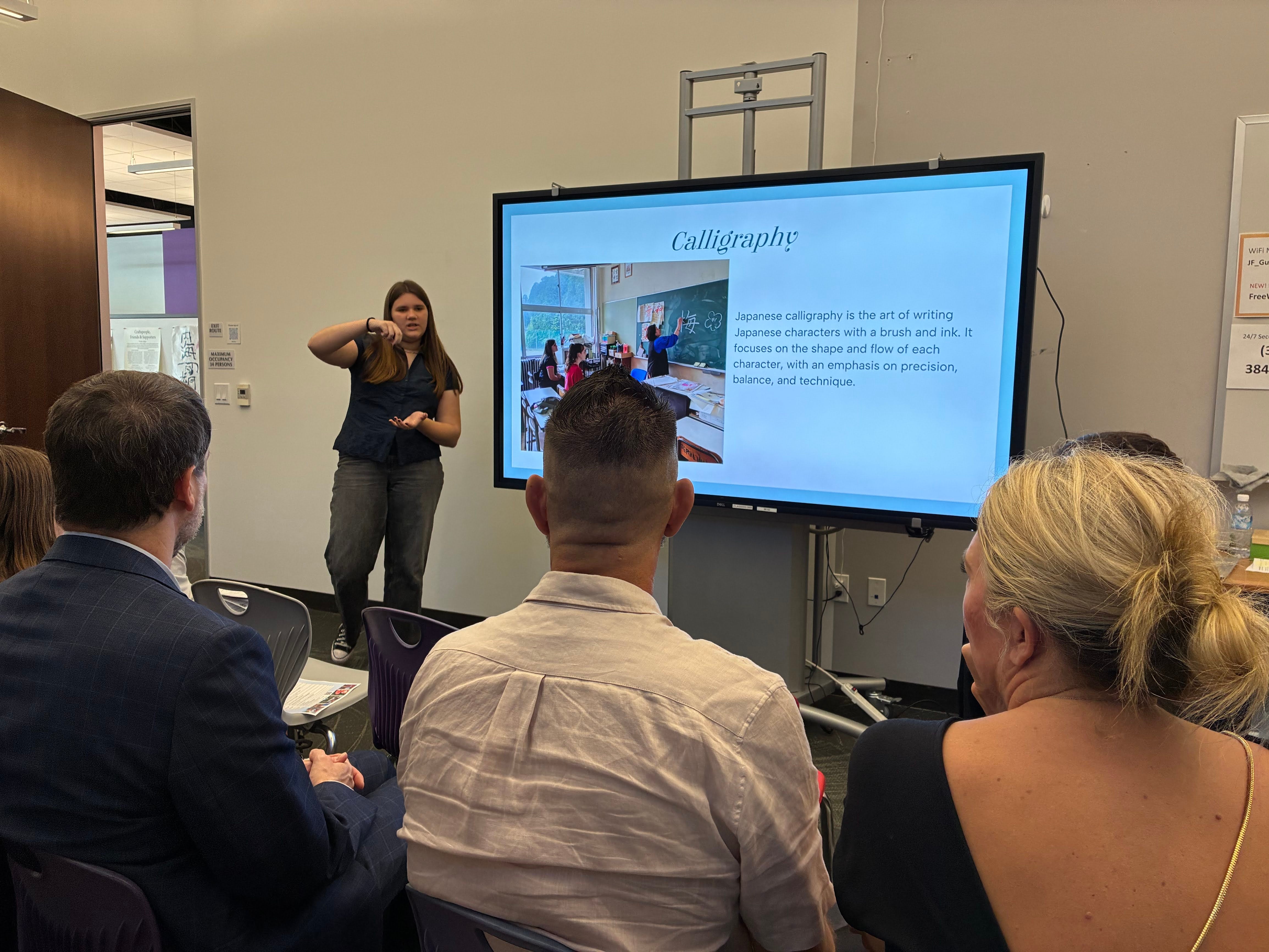
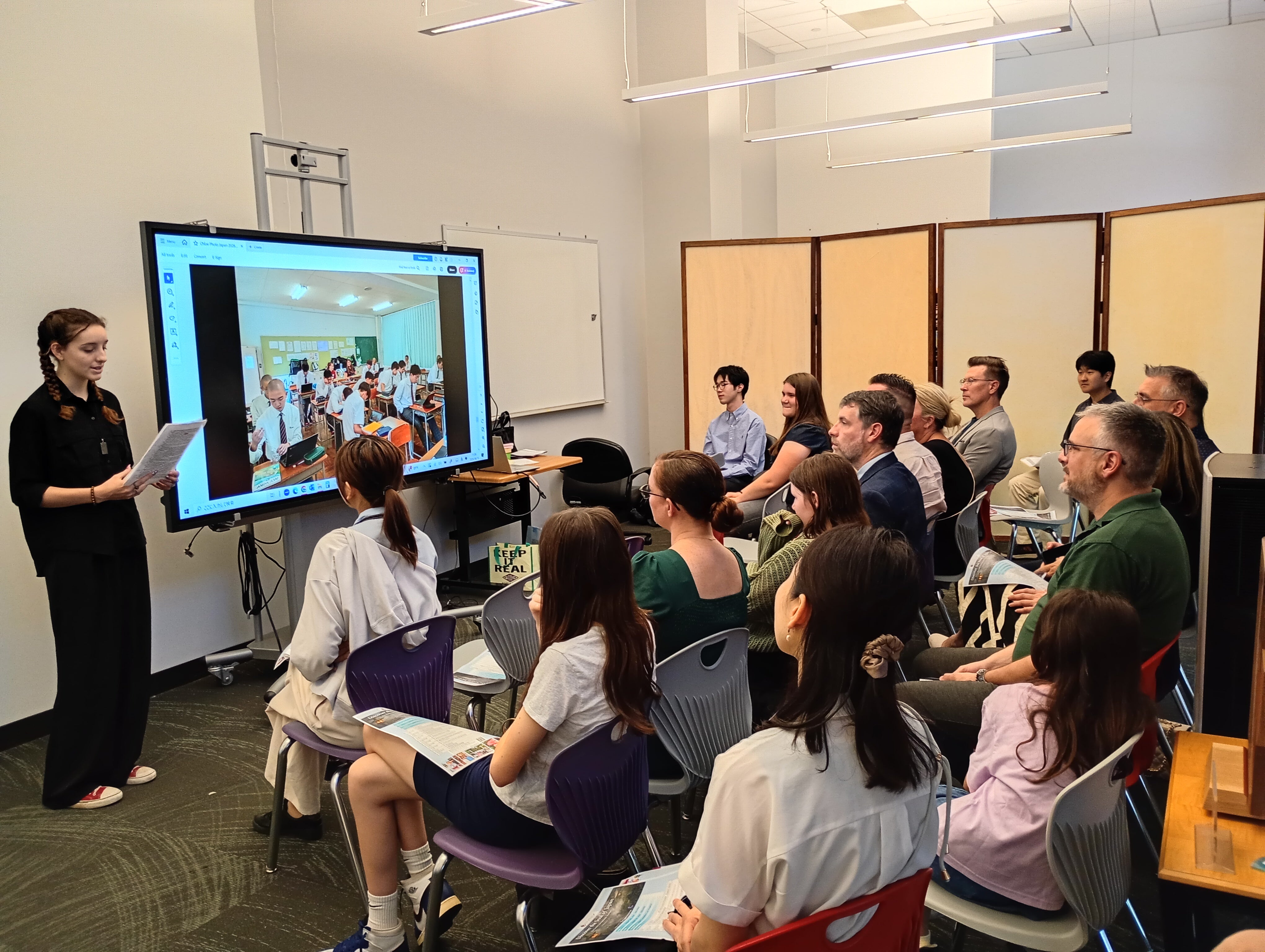
「Japan Koyasan Educational & Cultural Journey 2026」は、意義ある国際教育には、外国を訪れるだけでなく、その社会の中に入り、実際に生活し、学び、思考する経験が不可欠であるという理念に基づいて実施されました。 日本の現代社会を体験し、学校を訪問し、高校生と生活を共にし、授業へ参加し、伝統文化を学ぶ。さらにアメリカに帰国した後は、得られた経験を異文化比較の視点から分析し、学術的考察を論考としてまとめ、専門家の指導を受けたうえで、自らの言葉で発表する。こうした一連の探究過程を通じ、奨学生たちは日本を一時的な旅行先ではなく、主体的に学び、参加し、考察する対象として捉え直しました。 この2人がこの経験から実際に何を感じ、何を学んだのか―― 以下に掲載する彼女たちのエッセイから、皆様にも感じ取っていただければ幸いです。
Japan Beyond the Stereotypes
Sofia Obradovic
Throughout our lives, we encounter thousands of people from different backgrounds, beliefs, and cultures. Despite these interactions, we rarely take the time to truly understand the traditions and perspectives that shape their lives. In May of 2026, I was given the opportunity to travel to Japan, allowing me to experience a culture that I had previously only known through books, media, and the internet. Before my trip, my understanding of Japan was shaped by the images and stories presented through the internet, which often emphasized the differences between Japanese and Western societies. However, after spending time in Japan, I discovered that the similarities between our daily lives were just as significant as the differences. From Japan’s history to dormitory life, classroom traditions, elementary school experiences, this program showed me that cultures that appear separate can share many of the same experiences.
The media has always portrayed Japan as a successful and technologically advanced empire of the modern world, but it focuses on the superficial achievements instead of the life changing advancements of their country. One such figure was Hanaoka Seishū, an Edo-period surgeon who invented the use of general anesthesia and performed one of history's earliest successful breast cancer surgeries. During my trip, I visited the Hanaoka Seishū Memorial Museum and his former residence, where I learned about both his medical achievements and his personal sacrifice. His wife may have participated in his early anesthetic experiments before later dying of breast cancer, though historians have never confirmed a connection between the two. What is certain is that Hanaoka eventually developed a reliable general anesthetic, which he used to perform his groundbreaking operation and permanently changed the future of surgery. These technological advancements could not have been achieved without the Japanese education system.
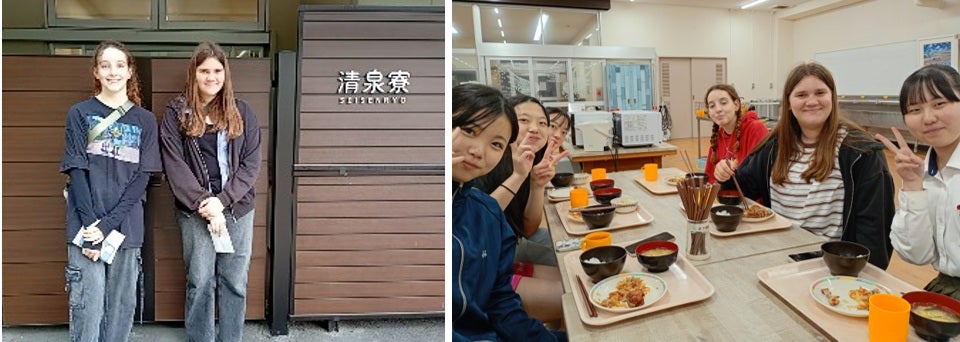
The Japanese education system is known for its harsh academics and high performance but most people are unaware about the student life. During my time with the program I stayed at the girls dormitory at Koyasan High school. One of the most surprising aspects of the dormitory was its approach to shared living. Although each room was equipped with a private shower, the toilets were located in a communal bathroom down the hall. The bathroom also reflected Japan's emphasis on cleanliness and respect for shared spaces. Before entering, everyone was expected to remove their regular slippers and change into a separate pair reserved exclusively for the bathroom. Another aspect I observed was the students' daily morning routine. Every morning, after gathering for roll call, they would head to the dining hall to eat breakfast. Breakfast was very different from what I was accustomed to, both in terms of the food and the dining etiquette. The boys and girls were seated in separate sections of the dining hall, divided by a wall. Rice, soup, and tea were served every day as staple items of the meal. Before eating, all of the students would place their hands together and say itadakimasu, which is a Japanese expression meaning "I humbly receive this meal" and is used to express gratitude for the food and those who prepared it.
Aside from the dorms, the Japanese classrooms are very different from typical American ones. Oftentimes various Japanese shows or anime are set in a classroom setting where the classrooms feature small desks, a blackboard at the front, and sliding doors. These portrayals seemed somewhat exaggerated, but they were surprisingly accurate. Every classroom followed nearly the same layout, with two sliding doors located at the front and back of the room, rows of desks facing the blackboard, and large windows lining one wall to let in natural light. In addition to the physical layout, I also noticed differences in classroom etiquette. While it is widely known that Japanese culture values politeness and respect, not many people know just how much those values are incorporated into daily life. Each morning, when the teacher entered the classroom, the class president instructed everyone to stand, bow, and greet the teacher before the lesson began. At the end of each school day, students also took time to thoroughly clean their classrooms, demonstrating the importance of maintaining shared environments and responsibility.
Although the media does frequently depict Japanese high schools, Japanese elementary schools are often ignored. After staying at Koyasan High School, I got to visit Ritsumeikan Primary School in Kyoto. Many people might expect Japanese kids to have a vastly different childhood than American children; however, this is not the case. Instead, I found that many aspects of elementary school life were surprisingly familiar. The classrooms were just as brightly colored, lively, and decorated with student artwork as those in Western schools. The physical education classes also reflected many similarities to those in the United States. In one class, the students were playing flag football, a sport that is commonly taught in American schools. Later, during snack break, I had the opportunity to interact with the students, who were bursting with excitement as they eagerly talked about Roblox, a game they were just as enthusiastic about as many children in the United States. Although there were cultural differences in other aspects of school life, visiting the elementary school showed that children in Japan and the United States often share many of the same everyday experiences.
Before going to Japan, my perception of the country was based almost entirely on books and media. These portrayals often focused exclusively on Japanese culture, rarely showing the parallels to Western everyday life. As a result, they created the false impression that Japanese and Western cultures exist separately, when in reality they are far more interconnected than I had expected. Despite being divided by continents, the childhoods of both cultures greatly resemble each other, from early school life all the way through high school. While I observed many cultural differences, such as classroom etiquette, dining traditions, and dormitory life, I also discovered that students in both countries share many of the same interests, routines, and experiences. My time in Japan taught me that understanding a culture requires more than simply learning about it from a distance; it requires experiencing the everyday moments that shape people's lives. By seeing both the differences and similarities firsthand, I gained a deeper appreciation for how connected people can be despite living in different parts of the world.
Stumbling Through Japan
Chloe White
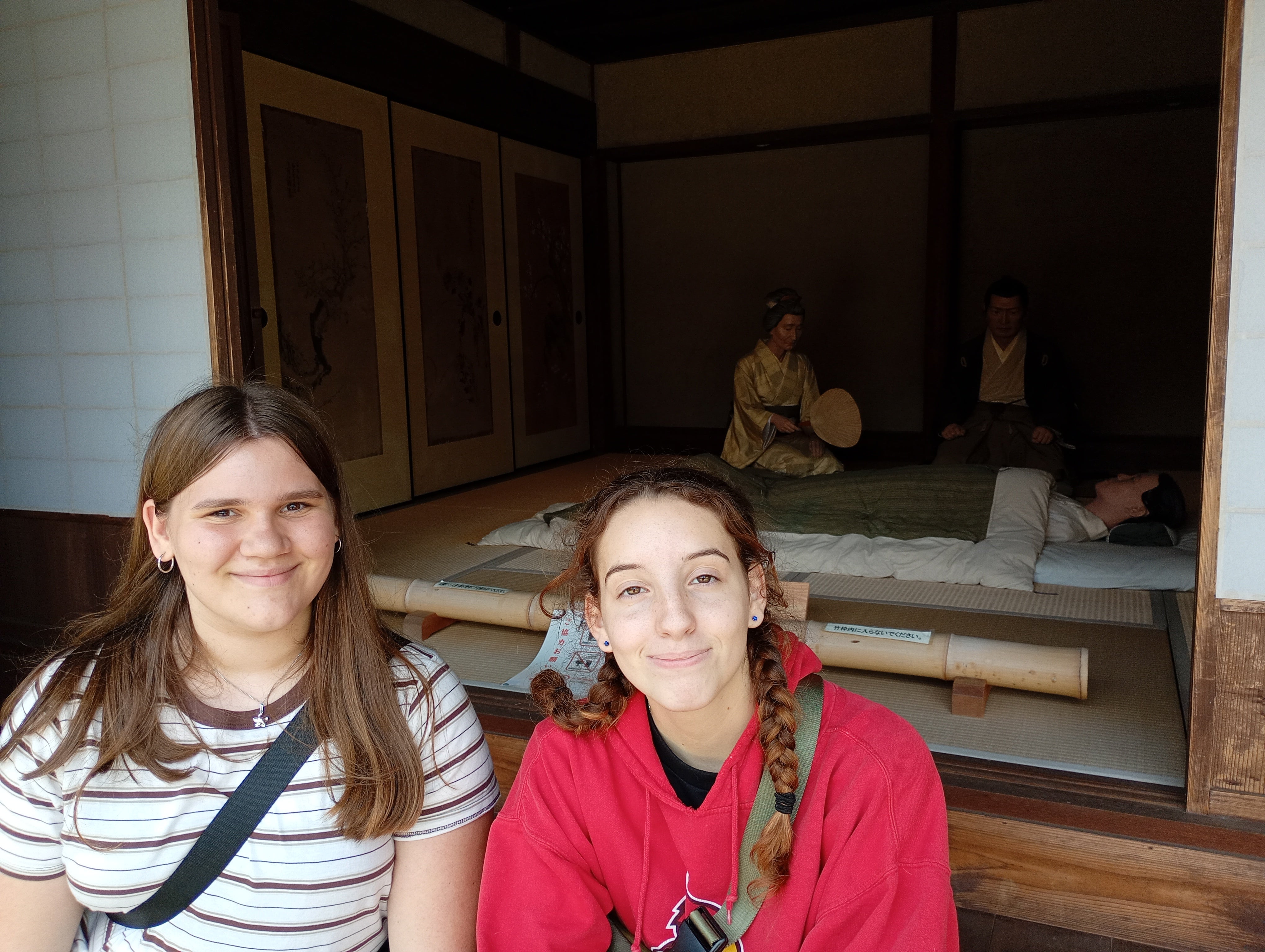
My biggest mistake was wearing lace up shoes in Japan. The group was moving on without me and I was caught in the doorway, awkwardly bending over, tediously untying my shoes. I was a bit embarrassed to be the last one into every building, and the last one out.
At some point, I resigned myself to my fate - and that’s when I began to notice -really notice- the space around me. I wondered if it was more than just separating the outside from the inside, and more than just trying to keep the dirt off the floors. It began to dawn on me that this was about intentionality and respecting the spaces you occupy. The more people I talked to and places I saw cemented this idea into my head, a concept I had never really thought about before. I started noticing things I would have missed otherwise.
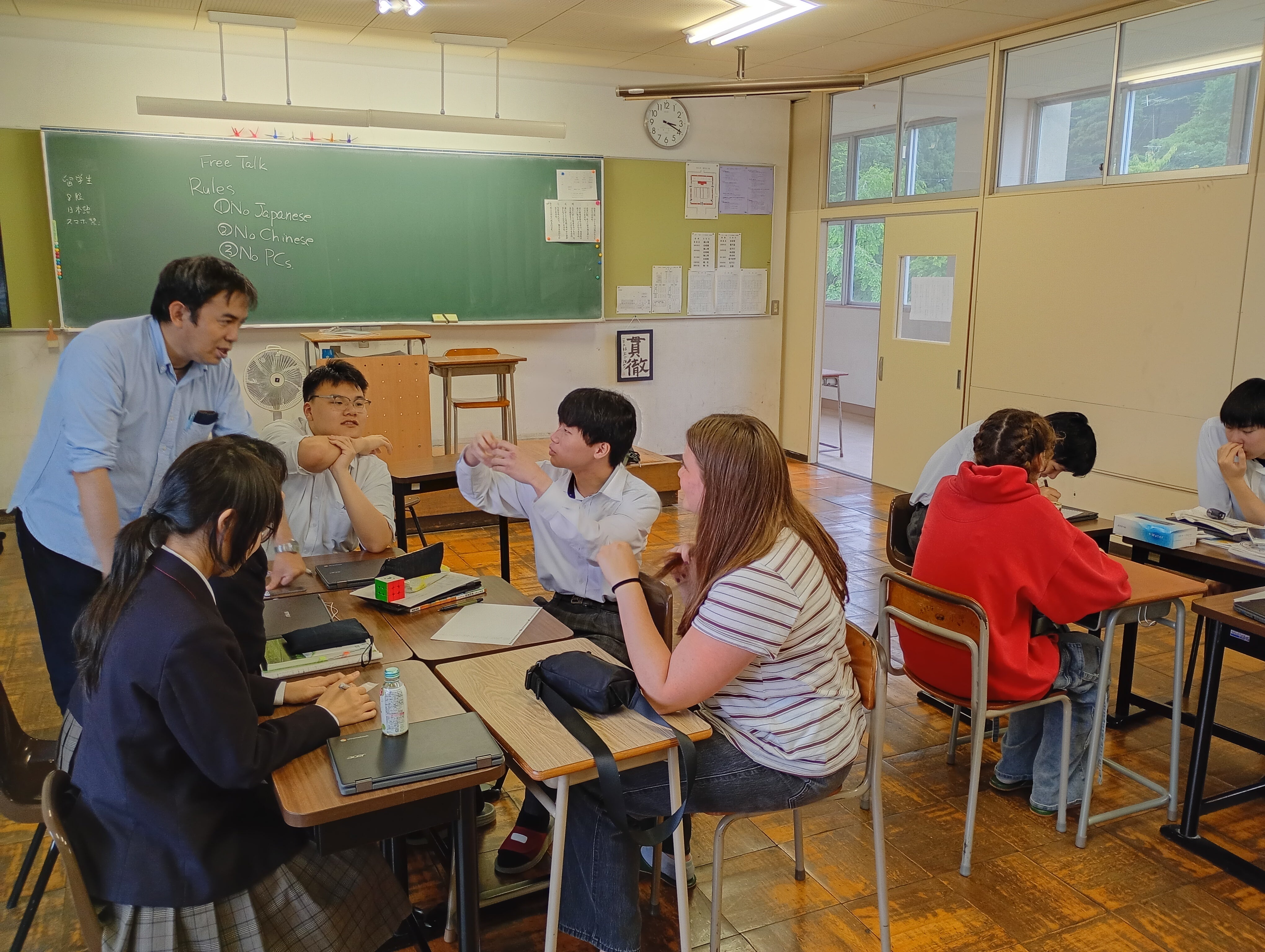
I remember the first time entering a classroom at Koyasan High School. I had gotten off my plane only hours ago. The chalkboard was wiped clean and the floors were swept and mopped. My initial thought was that a janitor had come in early to tidy up the classroom; but it was the students, something I realized after being handed a broom by a girl I would now like to call a friend. I awkwardly pointed to the floor with a questioning look, and she nodded. Overcoming language barriers with hand gestures was my new specialty.
The students took time after every lesson to clean the room. They cared for the space not just for the sake of cleanliness - but for whoever might be using the room next. This shared respect creates a space where everyone is contributing to learning and helping each other. I saw first-hand the community and respect students treated their teachers with at school, always saying good morning to them and bowing when leaving a room. It almost felt like a family with the small class of students as the kids and the teachers as the parents.
It is pretty different from how things are in America, where the atmosphere is different. In Japan, the overall community comes before smaller communities, but in America, people primarily think of themselves as individual communities first and larger communities second. With how big our country is, it's easy to feel disconnected from someone just two cities away- let alone two states away! So connecting through shared interests is how we identify with others whether it's through your sports team, bonding over your favorite shows or something else. We like to build our communities through our interests and beliefs. Finding people you have something in common with makes them a part of your community.
I noted that in Japan, community isn't built through a shared love of sports or food, but it's built into the world around you. Instead of focusing on finding community, people prioritize building up the community that's already there. I remember the chance I had to talk to a member of the house of representatives in Japan. His name was Mr. Keiro Kitagami, and as we talked he told us about his views on Japan and the importance he placed on its shared community. He valued the respect and time each citizen put into lifting up the people around them. He wanted to show us that in Japan, no matter how different you are, you and your neighbor will always have something in common, even if it's just taking off your shoes at the door.
Looking back on the trip, I can find myself learning to appreciate simple and thoughtful motions and concepts. Slipping off your shoes at the entrance isn't just a strict rule to follow, it's a whole mindset about being aware of your surroundings. It’s about realizing that how you treat a space isn't only to benefit one person, it's a small act of respect for yourself and everyone around you. I appreciate the environment it creates too. It's easier to connect with people when you all have something in common. Everyone is in tune with a cultural identity. I hope that as I continue to grow as a person, I am able to carry these new lessons with me, even if it takes me a while to untie my shoes.
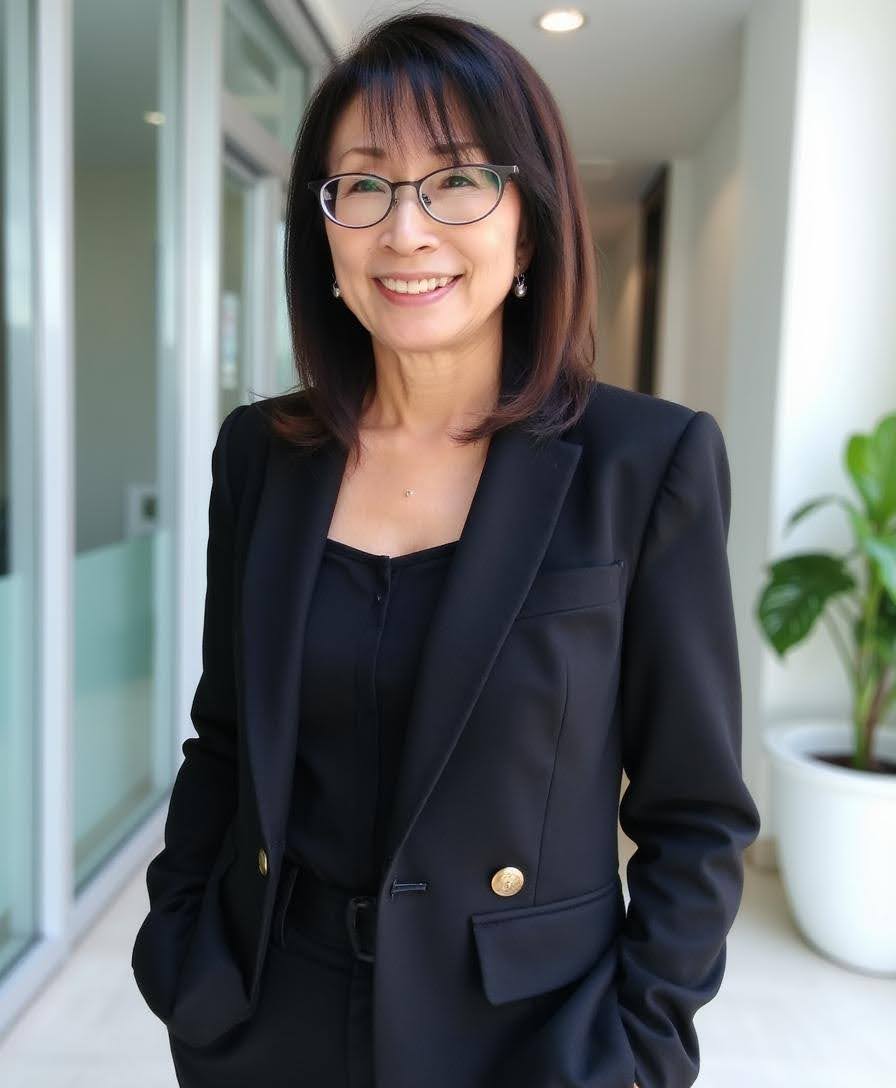
岩井英津子(いわいえつこ) 国際教育アドバイザー。USJP Rockwell Education & Beyond 代表。 アメリカロサンゼルス在住40余年。商社の女性駐在員として渡米し、退社後、永住権取得。補習校の教員として小学校中学校の指導歴20年、学校管理職10年および専務理事として補習校経営10年、在外子女教育に従事。 2024年よりJOESの国際広報を担当。2026年9月にJOESが開設した学習プラットフォーム「JOES Global Online Academy LEAD (通称:GOAL)の事務局長も務める。

.jpg)
.jpg)
.jpg)
.jpg)
.jpg)
.jpg)
.jpg)
.jpg)
.jpg)
.jpg)
.jpg)